Introduction of Electric Vehicles and their Charging Infrastructure in the Company
Project title:
Implementation of the project “Introduction of Electric Vehicles and their Charging Infrastructure in the Company” (Identification No. MF-1/3)
Project description:
Electronic Communications Office of Latvia is introducing the electric transport and implementating project with the support of the Modernisation Fund, in Modernisation Fund financed call of proposals "Enhancing Energy Efficiency in the Transport Sector – Support for the Implementation of Electric Vehicles and Their Charging Infrastructure" announced by Environmental Investment Fund of Latvia (SIA "Vides investīciju fonds".
Project goal:
The goal of the project is to reduce air pollution and promote the integration of environmentally friendly transport solutions into the company's operations. As part of the project, it is planned to replace a portion of the existing service vehicles operating on fossil fuels with four electric vehicles. This step will enhance the company's energy efficiency by reducing carbon emissions.
Project implementation period:
June 10, 2025 – December 9, 2026 (18 months).
Financing:
The total project costs are EUR 160,200.00, of which co-financing from the Modernisation Fund resources amount up to EUR 20,000.00 (twenty thousand euros and 0 cents).
Family and Children's Career Day of the Electronic Communications Office of Latvia
Project title:
Family and Children's Career Day of the Electronic Communications Office of Latvia.
Projekta numurs: 2025.LV/ĢDD/025
Project goal:
- To organize an educational event for the children of company’s employees, to introduce them in an understandable, child-appropriate, and practical way to their parents' work environment and the company's field of activity – radio frequency spectrum management, which is almost invisible to the public in everyday life but essential for anyone who uses wireless communications, e.g., mobile phones, the internet, television, walkie-talkies, etc.
- To promote various family-friendly educational activities, introducing employees' children to their parents' occupations and careers, so that both the children and the families benefit from learning and resting together.
- To introduce children to the world of radio frequencies and various types of radio communication, thereby increasing their interest in the STEM field and gaining an understanding of the basic operating principles of radio communication systems.
During the Career Day, numerous parents will act as guides or participants in the activities, strengthening family involvement and intergenerational connection, and promoting the development of a family-friendly work culture in Latvia.
Project implementation period:
August 1, 2025 - to October 1, 2025.
Financing and grant program goal:
The project co-financing costs are EUR 4,000.00, which are financed by the European Union and the event is organized within the framework of the European Social Fund Plus project “Creating a family-friendly environment and society”, project number 4.3.6.9/1/24/I/001”.
The goal of the grant program is to create a supportive society for families with children by implementing measures and support programs to promote psychological and emotional resilience, creating prerequisites for the positive development and social integration of children, allowing them to realize their potential for a successful life.
Radio Spectrum Usage Control – Electromagnetic Compatibility (EMC) Assessment and On-site Radio Equipment Inspection
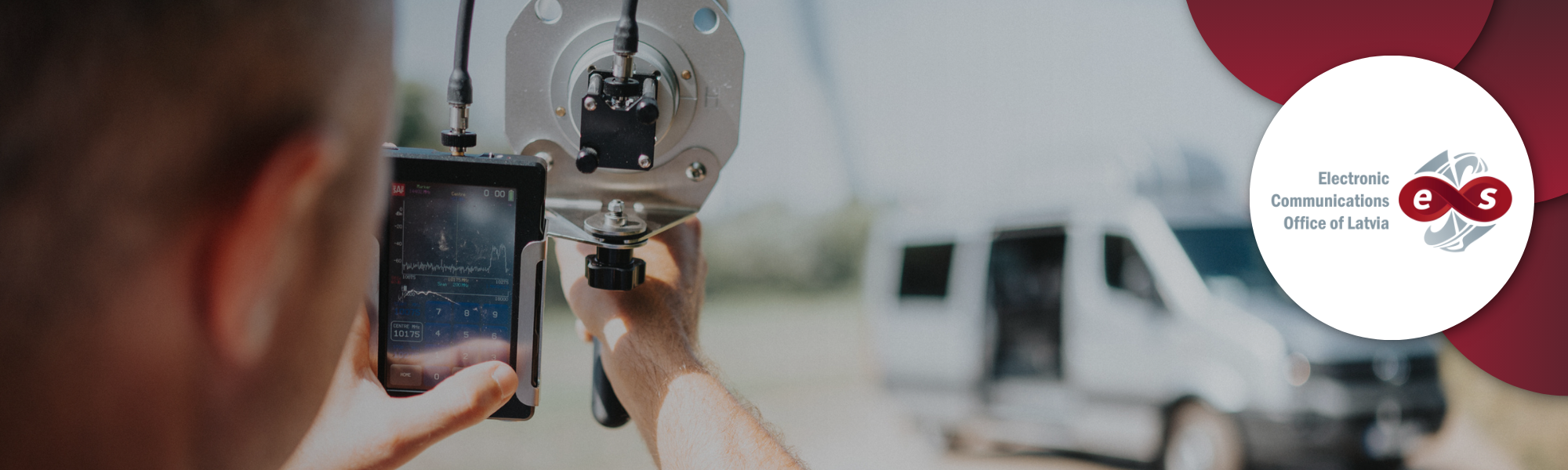
This two-day program is intended for spectrum monitoring engineers, EMC experts, and mid-level managers from national spectrum administrations and regulatory authorities. It is designed to strengthen both theoretical understanding and practical competencies in spectrum usage control, EMC assessments, and radio equipment inspection.
Delivered in English, the course combines lectures, demonstrations, case studies, and on-site practical exercises. Participants gain a comprehensive understanding of the regulatory framework, EMC compliance requirements, inspection workflows, and the use of monitoring and direction-finding equipment in real operational environments.
Training Content
Day 1 - Fundamentals of Spectrum Management and EMC Assessments
Modules:
- Spectrum Management Framework and Regulatory Environment
- Electromagnetic Compatibility (EMC) – Concepts and Compliance
- Technical Inspection and Expert Assessment Workflow
- Measurement Equipment and Automated Route Planning
Day 2 – Practical Field Exercises: On-site Expert Assessment and Inspection
Modules:
- Preparation and Equipment Configuration
- Pre-field Interference Investigation
- On-site EMC and Radio Equipment Inspection
- Summary Exercise and Course Conclusion
After completing the program, participants will be able to:
- Understand and apply international spectrum management and EMC regulations
- Conduct professional on-site EMC assessments and radio equipment inspections
- Operate spectrum monitoring and direction-finding instruments effectively
- Plan and optimize inspection routes using automated tools
- Analyze, document and report findings in accordance with international standards
Fee and What Is Included
Fee: 2190 EUR (including VAT).
Included:
- A comprehensive 2-day in-person training programme
- Expert lectures, demonstrations and case studies
- On-site practical experience
- Access to necessary professional equipment
- Digital training materials
- Coffee breaks
The training course will be held in person at Eksporta street 5, Riga, Latvia.
It will take place in spring 2026, with participants selecting their preferred dates in the application form.

For additional information, please contact us:
Service manager
Diana Baranova
E-mail: Diana.Baranova@esakari.lv
Radio Spectrum Management, Monitoring and Interference Analysis
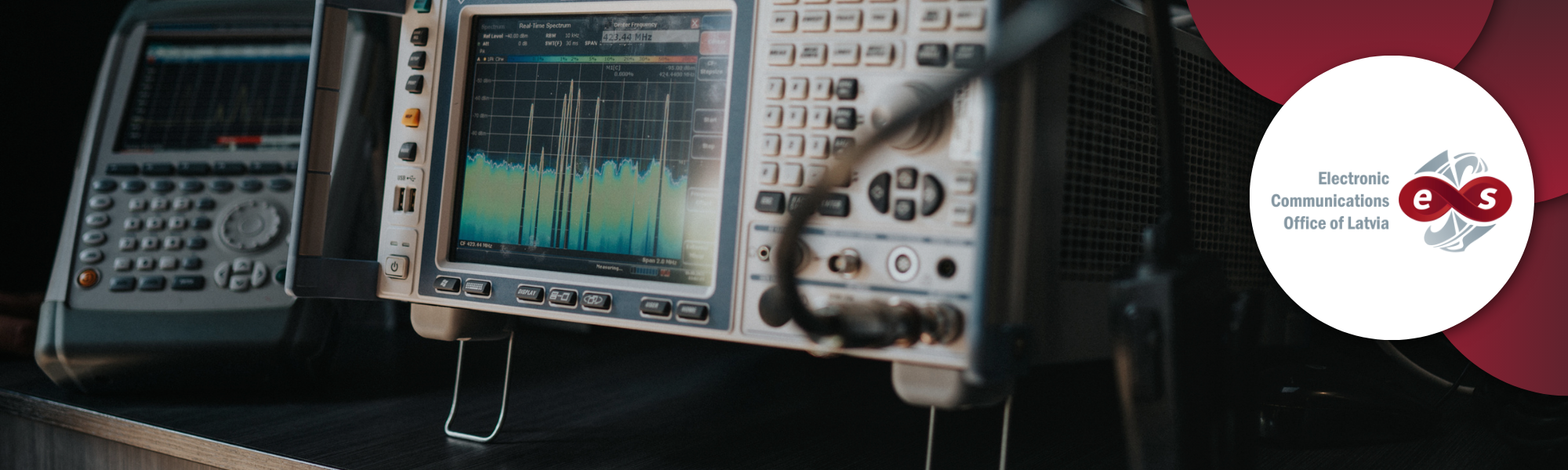
This two-day program is intended for spectrum management officers, monitoring engineers, and mid-level managers working within national frequency administrations and regulatory authorities. It is designed to strengthen their skills in spectrum management, monitoring, interference detection, and equipment compliance evaluation.
Delivered in English, the course combines lectures, demonstrations, case studies, and hands-on activities. Participants gain a comprehensive understanding of radio spectrum management principles, international coordination, spectrum monitoring practices, interference analysis, and equipment compliance assessment in line with ITU, CEPT and ETSI recommendations.
Training Content
Day 1 - Fundamentals of Spectrum Management and Monitoring
Modules:
- Spectrum Regulation, Allocation and International Coordination
- National Spectrum Management and Licensing
- Measurement Principles and Instrumentation
- Spectrum Monitoring and Data Analysis
Day 2 – Interference, Compliance and Practical Exercises
Modules:
- Radio Equipment Compliance and Market Surveillance
- Interference Mechanisms and Mitigation
- Interference Detection and Direction Finding
- GNSS Interference, Evaluation and Final Exercise
- Closing Session
After completing the program, participants will be able to:
- Explain the principles of international spectrum management and coordination.
- Operate basic spectrum monitoring and measurement equipment.
- Identify and analyze interference sources using practical methods.
- Evaluate radio equipment compliance and assess GNSS signal integrity.
- Apply preventive spectrum protection strategies in national contexts.
Fee and What Is Included
Fee: 2190 EUR (including VAT).
Included:
- A comprehensive 2-day in-person training program
- Expert lectures, demonstrations and case studies
- On-site practical experience
- Access to necessary professional equipment
- Digital training materials
- Coffee breaks
The training will be held in person at Eksporta street 5, Riga, Latvia.
It will take place in spring 2026, with participants able to select their preferred dates in the application form.
For additional information, please contact us:
Service manager
Diana Baranova
E-mail: Diana.Baranova@esakari.lv
Training Courses
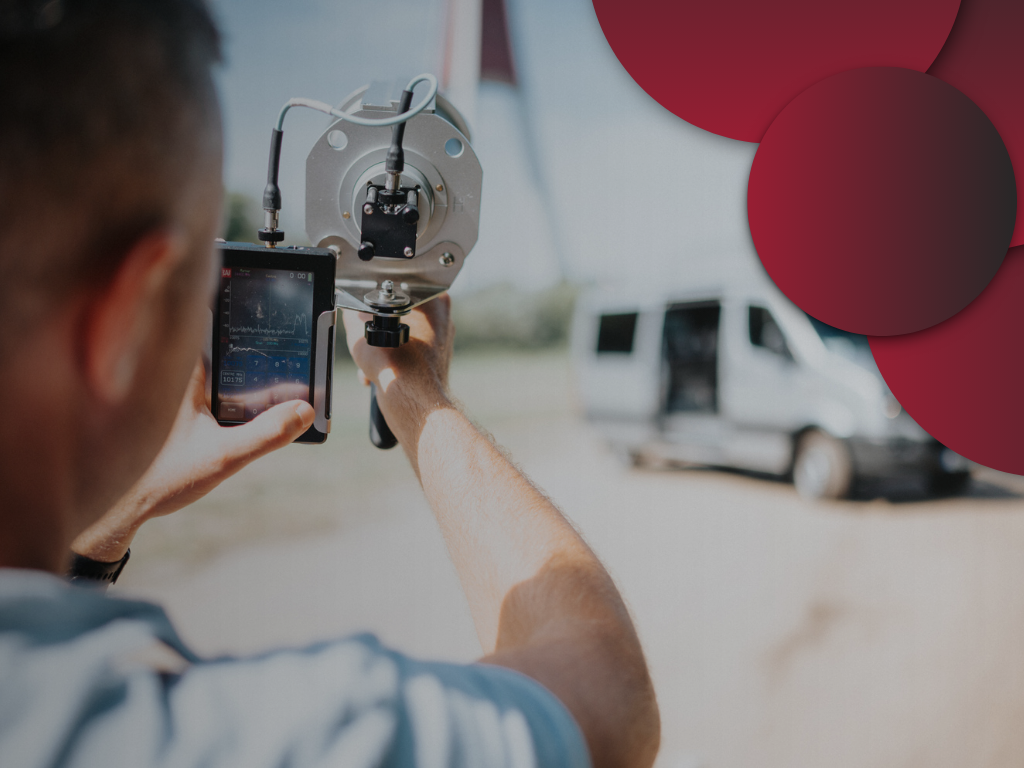
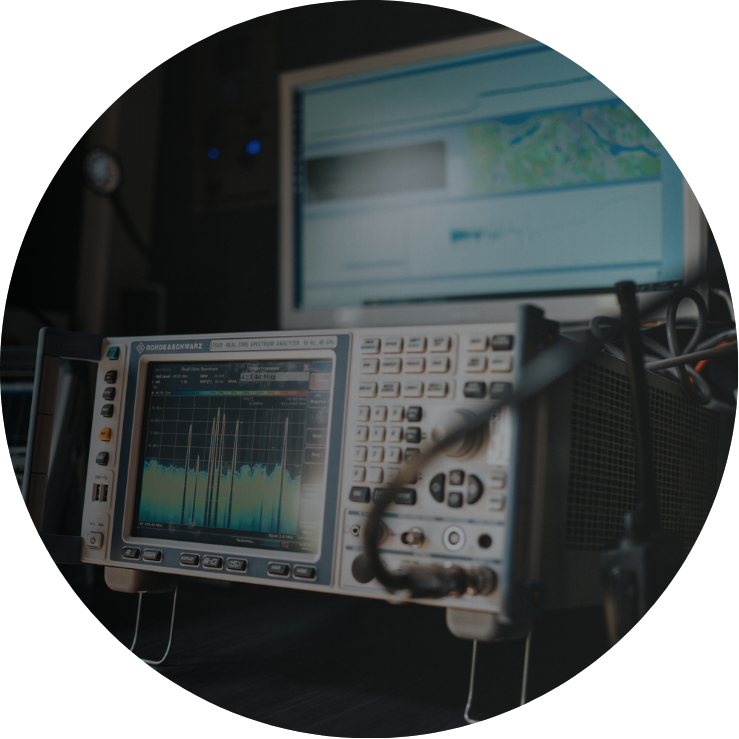
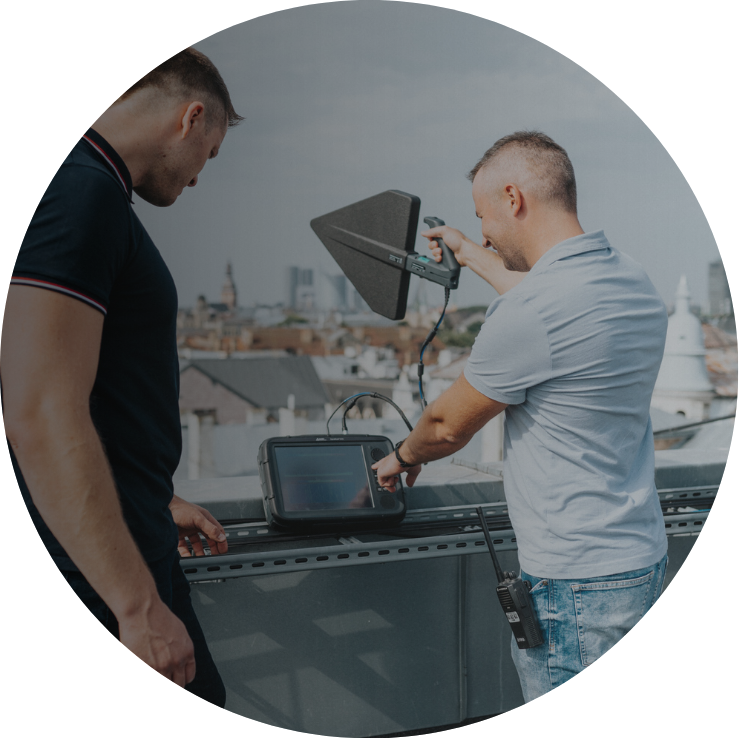
Based on our experts' extensive practical experience and deep institutional knowledge, we have developed three intensive training courses. These courses are carefully designed to help participants significantly enhance their understanding, practical skills and proficiency in key domains: Radio Spectrum Management (planning and monitoring), Radio Interference, Radio Spectrum Usage Control, etc.

Project STARC
Project title:
Strengthening the capacity of the State Institution "Information Technology and Cybersecurity Service" (STISC) to enhance funding allocation to the electronic communications sector to support integration into the European Union.
Project description and aim of the project:
The STARC project is a strategic cooperation initiative aimed at strengthening the capacity, resilience, and adaptability of Moldova’s electronic communications and cybersecurity systems. Its objective is to enhance the institutional capabilities and capacity of the State Institution "Information Technology and Cybersecurity Service" (hereinafter – STISC) for planning and implementing strategically important projects in the electronic communications sector, thereby supporting Moldova’s integration process into the European Union.
The project activities include:
- Strengthening institutional capacity by providing Moldova’s STISC with knowledge on EU digital infrastructure development principles and funding mechanisms, and by developing a tailored development plan aligned with the institution’s specific needs and priorities.
- Enhancing practical knowledge and skills through the development of a training program and modules, and by providing practical expertise and experience to support the development and implementation of digital transformation projects.
- Promoting regional cooperation and knowledge exchange by strengthening collaboration between Moldovan and Latvian institutions to ensure the transfer of best EU practices and foster long-term partnerships.
As a result of the project, it is expected that Moldova’s electronic communications sector will improve its ability to plan and attract financial resources for the development of strategic projects. In the long term, these skills will not only contribute to infrastructure development but also promote the creation of new strategic partnerships across a broader range of sectors.
Project funding:
Total budget: EUR 179,126.79.
This project is funded by the Ministry of Foreign Affairs of the Republic of Latvia. The Ministry of Foreign Affairs of the Republic of Latvia is not responsible for the content of this publication or website.
Project partners:
- Electronic Communications Office of Latvia
- SAFEGE Baltija
- State Institution “Information Technology and Cyber Security Service” (STISC)
The use of the Radiofrequency Spectrum During Large-scale Public Events
Requirements for Using Radio Frequency Spectrum in Latvia.
According to Clause 54 of the Electronic Communications Law, the use of radio frequency spectrum for radio equipment operation is allowed:
- with an individual radio frequency assignment permit issued by Electronic Communications Office of Latvia (ECO) (hereinafter referred to as an INDIVIDUAL PERMIT)
Individual permit is issued to a specific user, granting the right to use specified frequencies under the parameters indicated in the permit.
Common radio devices used under an Individual Permit during large-scale events include portable radio for voice radio communication (operating in the 146 – 174 MHz and 406.2 – 470 MHz frequency bands), wireless microphones and in-ear monitors, video signal transmission links.
- without individual permit (according to a shared radio frequency assignment permit (hereinafter referred to as a SHARED PERMIT)).
In this case, a permit is not issued to spectrum users. Shared permit allows the installation and use of radio equipment included in the “National Radio Frequency Plan” (Cabinet of Ministers Regulation No. 3, January 10, 2023) Appendix 3, operating within specified shared frequency bands or channels, adhering to technical requirements, spectrum usage conditions, and restrictions.
Common radio equipment operating under a Shared Permit includes: PMR446 portable radio for voice radio communication (operating in the 446.0 – 446.2 MHz band), car alarm remotes, various Wi-Fi devices (operating in the 2.4 GHz, 5 GHz, and 6 GHz bands), Bluetooth headsets.
| Usage | Frequency Band | Permit Type |
| Sound and video signal transmission | 470 – 694 MHz 2010 – 2025 MHz 2025 - 2110 MHZ 2200 - 2290 MHz 2360 - 2400 MHz 7128 - 7240 MHz 7282 - 7394 MHz 10 - 10,15 GHz etc. |
Individual permit (ECO) |
| Portable radio for voice radio communication | PMR446 portable radio for voice radio communication (private mobile radio communication system in the 446 MHz band, factory-programmed power of 0.5W, built-in antenna) |
Shared permit |
| 146 – 174 MHz 406,1 – 470 MHz |
Individual permit (ECO) | |
| Wireless microphones and in-ear monitors | 174–216 MHz 470 – 694 MHz 821,5 – 832 MHz |
Individual permit (ECO) |
| 863 – 865 MHz | Shared permit | |
| 1350 – 1400 MHz | Individual permit (ECO) | |
| 1785 – 1804,8 MHz 2400 – 2483,5 MHz 5725 – 5875 MHz |
Shared permit | |
| Broadband data transmission devices | 2 400–2 483,5 MHz 5470–5725 MHz |
Shared Permit, for indoor and outdoor use |
| 5150 – 5250 MHz 5945 – 6425 MHz |
Shared Permit, for indoor use and limited outdoor use |
|
| 5250 – 5350 MHz | Shared Permit, for indoor use only |
Complete and submit a request (application) to Electronic Communications Office of Latvia. The request must be signed by an authorized or delegated person, attaching the original of the corresponding power of attorney or a properly certified copy.
A foreign legal entity must, in addition to the application form, complete a "Customer identification form".
It is recommended to use the request form prepared by Electronic Communications Office of Latvia:
|
Attēls

|
Application for a Short-term e-licence |
|
Attēls
|
Customer identification form |
Sign the request with a secure electronic signature and send it to the email address esakari@esakari.lv or to the company’s official e-address (Latvija.lv).
The cost of obtaining an Individual permit depends on the type of radio equipment, its output power, the bandwidth of the radio frequency channel used, and other parameters. For exact costs of an individual permit, please contact the specialists at Electronic Communications Office of Latvia.
There are two types of payments:
- for reviewing a short-term permit application: EUR 38,53 (per permit);
- approximate costs for ensuring the electromagnetic compatibility of radio equipment:
- portable radio for voice radio communication: from EUR 3.00/day per channel;
- wireless microphones and in-ear monitors: from EUR 0.40/day per band or channel;
- video signal transmission radio links: from EUR 1.00/day per band or channel.